


Childhood cancer trials at risk as federal funding cuts threaten vital research programs

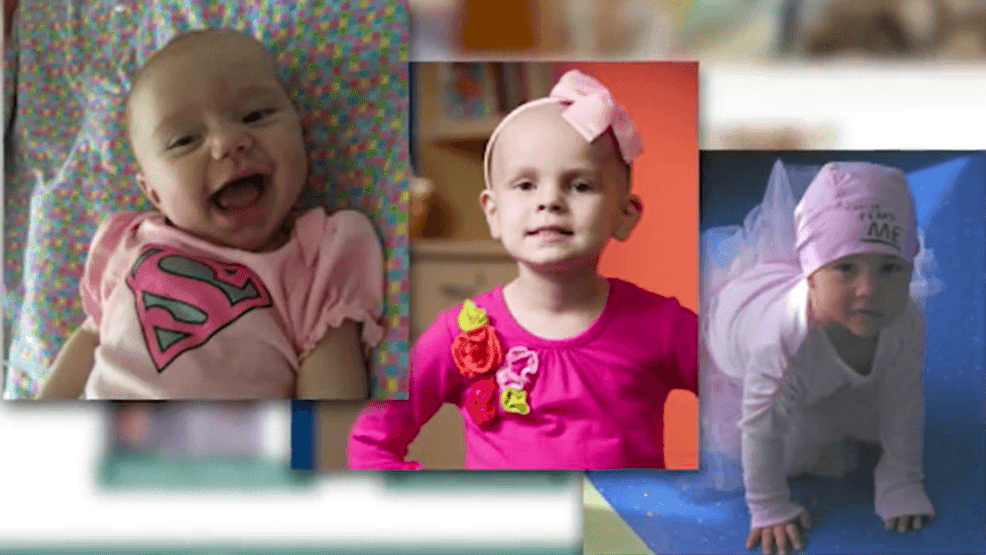



WASHINGTON (7News) — It wasn't that long ago that childhood leukemia was essentially a death sentence. Today, the vast majority of kids survive, thanks in large part to federally funded clinical trials, many of which could be in jeopardy if their already dwindling budget sustains further cuts.
Things aren't looking promising. Many thought the National Cancer Institute, the largest agency under the National Institutes of Health (NIH), whose mission is to help solve America's second-leading cause of death, would be relatively unscathed among sweeping federal cuts. But recently, cuts and terminations began hitting the agency as part of the Trump Administration's widespread government reductions.
One of the recipients of cancer research money from NIH is a group you've probably never heard of, called "COG," the Children's Oncology Group. It's a small organization of cancer doctors around the world who work together to try to cure childhood cancer --- the disease that is the number one killer of kids under the age of 20.
But thousands of kids know the Children's Oncology Group well. They are the patients who seek hope in clinical trials through COG, which runs anywhere between 70 and 90 at any given time.
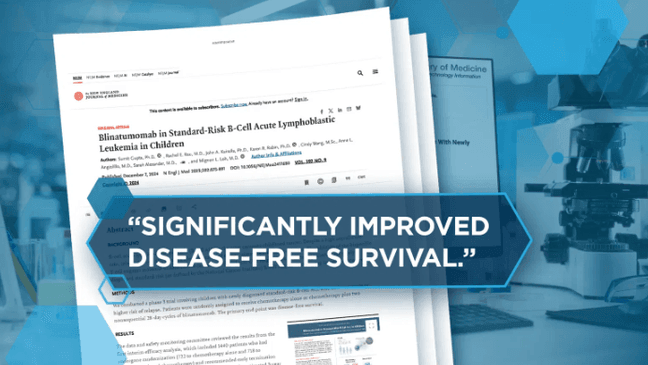
Successes include a recent trial that led to a new immunotherapy for kids. Researchers reported that it significantly improved disease-free survival.
But those successes are fragile and connected to funding that may disappear.
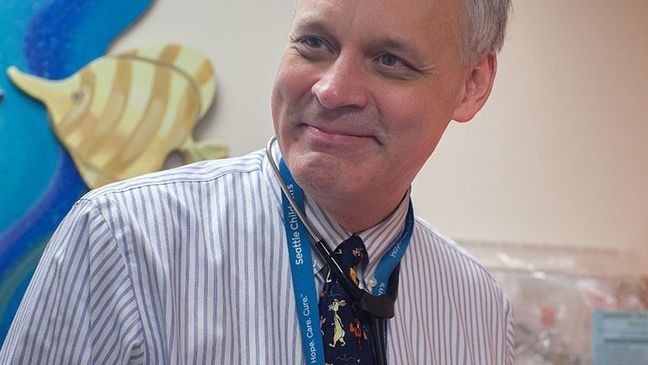
"Our ability to function is entirely dependent on federal support," said Dr. Doug Hawkins, Chair of COG, who treats kids with cancer at Seattle Children's Hospital.
It is Hawkins' job to make sure that the largest organization that conducts clinical trials for kids with cancer survives.
"If you're dependent on federal funds and suddenly that gets turned off, we're in deep trouble," he said. "In fact, it is an existential threat to us."
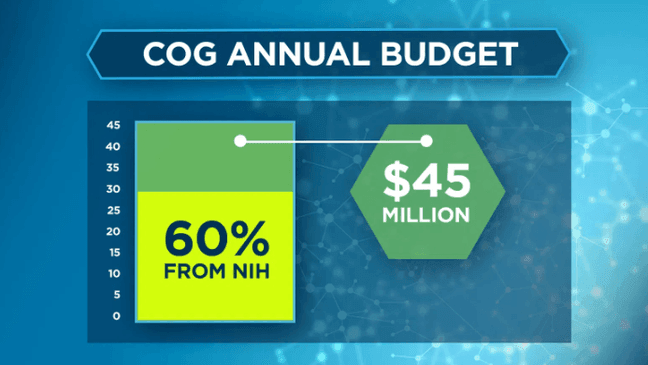
Sixty percent of COG's $45 million annual budget comes from the NIH, where news of recent funding slashes is creating anxiety for the group that largely depends on NIH funds.
Even before this year, only 4% of all government cancer research dollars went toward pediatric studies. The bulk of approximately $8 billion is for adult cancer.
Pharmaceutical companies dedicate enormous sums of money to adult cancers because of the large patient population, but are less likely to fund trials for kids, making federal money for COG essential.
Oncologists said when it comes to treating childhood cancers, there is a major difference between what works for adults and what works for kids.
"We don't worry about 20-year side effects when you're treating a 70 or 80-year-old, we don't worry about the growth impacts, the impact of the growth on a developing organ or body in a fully developed adult," said Dr. Hawkins. "That just is not a relevant issue. It is an issue in a three-year-old."
Dr. Robert Dilley knows the issue well. He was diagnosed with leukemia in 2007, when he was just 18 years old. He agreed to be part of a COG trial, testing a promising new addition to chemotherapy. Twenty years later, that trial drug is the backbone of many child cancer treatments.
"I am a beneficiary of a pediatric clinical trial, and I don't know if I would still be here today if that trial had not been funded by the National Cancer Institute and the NIH," said Dr. Dilley. "It is because of the trial that I participated in, it remains a standard treatment decades later, and so it's saved countless lives because of that."
Today, cancer-free for nearly two decades, Dilley is a physician and researcher at Harvard, treating patients he hopes will have access to the cutting-edge medicine that comes out of clinical trials, spanning the world of medical research.
"There's concern that it will go from a small amount to now next to nothing, and that we will really lose all of the progress and hope that we've been making in those diseases," he said.
For Dr. Hawkins and the COG team, it is a nerve-wracking time, as they await final word from the feds on COG's budget, which has been flat for seven years, despite inflation and the rising costs of doing research. Hawkins expects a 10% cut at best, and at worst, having to make hard choices about how, and whether, lifesaving trials can continue.
For now, the work is ongoing.
"It is unacceptable to freeze things," said Dr. Hawkins. "Pediatric cancer is rare, but the impact on those children and their families and their communities is huge. The impact of restoring a child to health for the rest of their life for decades of life is huge. And that's why we can't freeze things in 2025. It's just not acceptable."
During this time of uncertainty, we reached out to the leadership of the Congressional Childhood Cancer Caucus to ask what they're doing to ensure funding for COG and whether they had any insight about potential budget cuts.
Representative Michael McCaul of Texas founded the Childhood Cancer Caucus. Members of his staff responded to our inquiry. While they could not provide any funding information for childhood cancer clinical trials, they told us that McCaul has reintroduced the Give Kids A Chance Act, which aims to accelerate pediatric cancer treatments and expand access to life-saving therapies for children battling rare diseases.
In the meantime, Dr Doug Hawkins of COG is encouraging Americans to make their voices heard by contacting lawmakers and asking for this research to be prioritized. You can find out how by clicking this link.
